History of canvas floorcloths
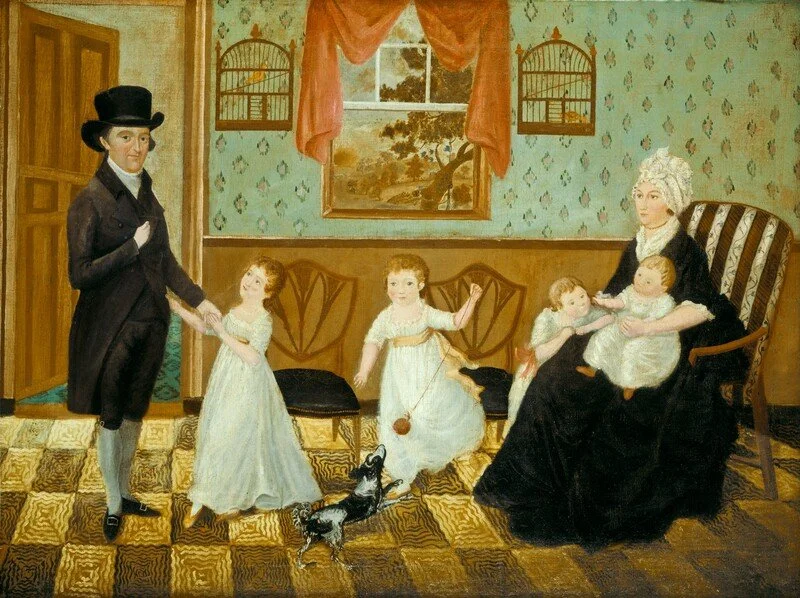
1800’s painting showing canvas floor cloth
Source: https://www.nga.gov/artworks/42452-sargent-family#provenance
Early history:
Floorcloths, initially known as “oil cloths” (because they were coated in an oil-based varnish) date back as far as the 1700s, and were first used to keep down the dirt on the floor.
“Before the invention of linoleum took the title, the floorcloth enjoyed over two centuries as the trendiest floor covering to infatuate the middle class. In fact, the emergence of the middle class is what enabled its rise to fashionable popularity by the 1700s.
The new middle class had new expendable income. Yet, while they could indulge in little luxuries, those luxuries still needed to serve a purpose. The floorcloth could be both luxurious and utilitarian - functional, yet stylish. Pricey, yet useful enough that the middle class household could justify the cost.
Floor coverings were essential to any household. They helped to keep floors clean, and to retain warmth in the winter. Prior to the floorcloth, only the elite could afford to decorate their interior floors with exotic carpets or patterns of marble, ceramic, or parquet. The rest of the population resorted to the objectively plain and strictly functional straw rug or woven mat, which was much more susceptible to deterioration and insect infestation. The floorcloth changed all of this. ”
Into production:
Initially, sails from ships were recycled as floor cloths, and hand-painted by artisans or even individual homeowners. In the 1800’s, with the advent of of woodblock printing, factories began producing floorcloths with designs resembling marble, ceramic tile and other geometric patterns.
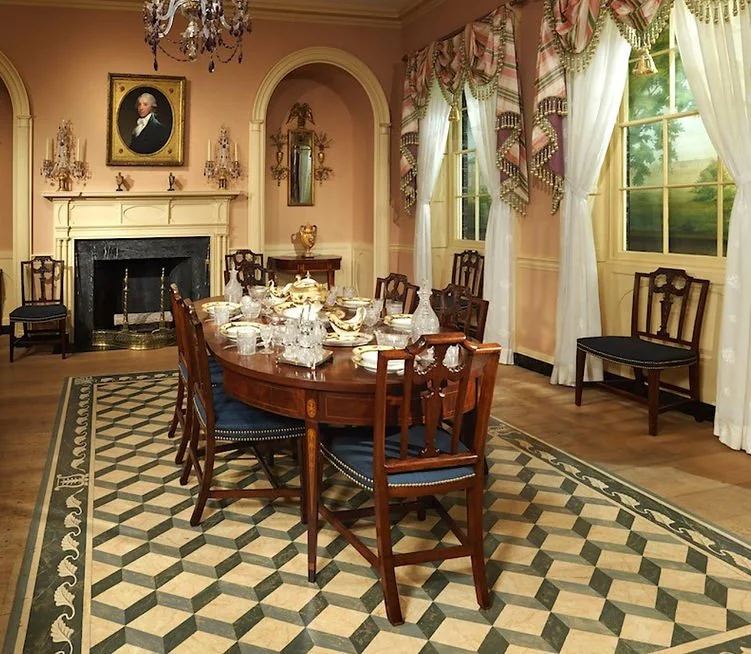
An oil cloth on the dining room floor, from the Craig House in Baltimore, now part of the The Met https://www.metmuseum.org/about-the-met/collection-areas/the-american-wing/period-rooms/baltimore-room. Original image from: https://www.baldwinparkphilly.org/oil-cloths
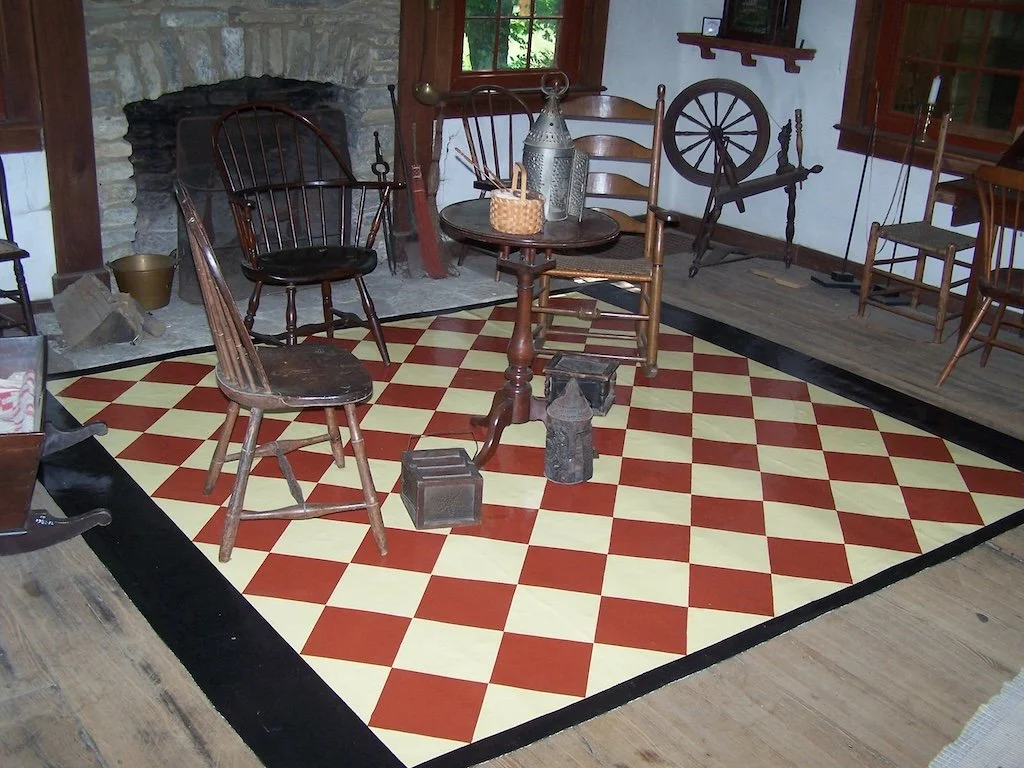
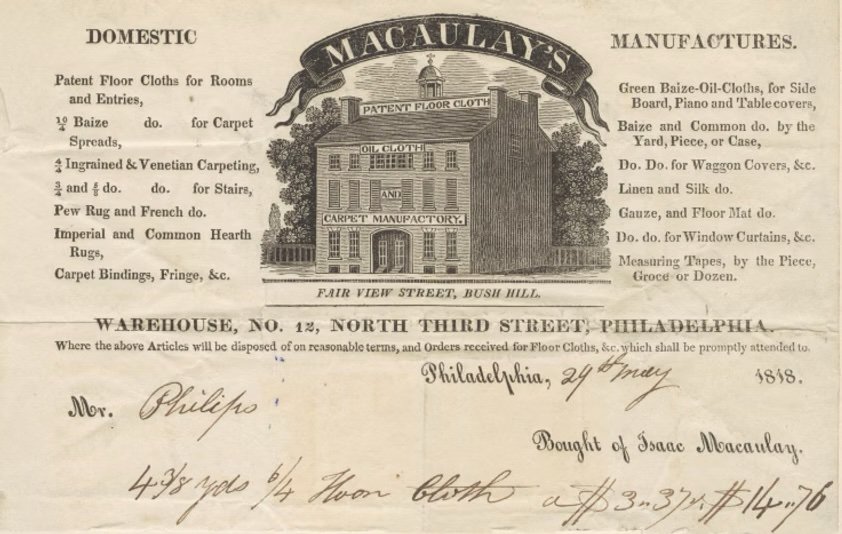
A handwritten bill for a commercially produced floorcloth from 1818
Castner, Samuel, Jr., 1843-1929 - Compiler. (ca. 1818). Macaulay's Carpet Manufactory. Fairview Street, Bush Hill [Graphic].. [Engravings]. Retrieved from https://libwww.freelibrary.org/digital/item/47760
Large scale manufacturing of floor cloths was quickly surpassed by the advent of linoleum, initially patented in 1864. Linoleum quickly became the standard for floor covering owing to its durability and lower cost to produce (using flat-bed and rotary printing).
There has been renewed interest in floorcloths recently, but the large majority produced are “period reproductions” using geometric shapes and typically muted colors. Sarah Minor Design bucks this trend, using freehand painting and bold colors!